
The African Conviviality Center:
Fostering Deeper Engagement with Africa

Kiyoshi Umeya
The Graduate School of International Cultural Studies at Kobe University has established the African Conviviality Center to foster a more profound and conscious exchange with African researchers and students.
While Kobe University has steadily increased its international cooperation across various fields, these partial exchanges are no longer sufficient for engaging with Africa, a burgeoning global frontier.
Our Graduate School, which delves into international research through the humanities, social sciences, and ICTs, has recognised the growing importance of Africa’s indigenous and endogenous knowledges and philosophies. This understanding has fuelled a strong desire to deepen our engagement. Since 2015, we’ve collaborated on joint research with Francis B. Nyamnjoh, who serves as an advisor to the Center. However, there’s a clear and increasing need to actively learn from exceptional African scholars like him and to cultivate more vibrant exchanges between our students and theirs. The new Center provides the dedicated framework to facilitate these crucial activities.
The Center’s name, “Conviviality,” draws inspiration from one of Nyamnjoh’s core ideals: the journey of becoming human. Conviviality embodies the concept of acknowledging differences, even when they clash, while still sharing mutual benefits. This ideal perfectly encapsulates the Center’s vision.
Established in April 2025, the African Conviviality Center will focus on the following key activities:
- Promoting research projects specifically targeting Africa.
- Supporting research projects led by African researchers and students.
- Organising seminars and events to disseminate the findings from these research initiatives.
- Facilitating liaison with relevant domestic and international organisations and institutions.
- Undertaking other essential tasks related to African researchers and students.
While the Center will continue to provide administrative support in English for daily life and research, and guidance for learning Japanese – services also offered to other international researchers – we acknowledge the current limited presence of African residents in Japan. We recognise the limitations of an essentialist categorisation, but we believe there’s a strategic rationale in temporarily grouping initiatives under “Africa” to effectively promote these vital exchanges.
Ultimately, the goal is for the Center to become redundant. Our vision is a future where African researchers and students naturally integrate into the graduate school as colleagues and fellow students. With this in mind, the African Conviviality Center proudly begins its important work.
Kiyoshi Umeya,
The 8th Dean of the Graduate School of Intercultural Studies, Director of African Conviviality Center
The African Conviviality Center:
Fostering Deeper Engagement with Africa
―Message of endorsement from Francis B. Nyamnjoh―

Francis B. Nyamnjoh
(Photo by Todd Gray)
Dear Colleagues, Friends, and Future Collaborators,
It is with immense pleasure and a profound sense of shared purpose that I endorse the establishment of The African Conviviality Center at Kobe University’s Graduate School of International Cultural Studies, set to launch in April 2025.
Since the 1990s, my work has explored the intricate dance of incompleteness and the vital imperative of conviviality. The core idea is that we’re all inherently works in progress, and our greatest potential emerges not from a quest for isolated perfection, but from the dynamic, often challenging, yet ultimately enriching interactions we have with others. It is deeply gratifying to see these concepts, which champion the acceptance of difference and the pursuit of mutual benefit, not only embraced but made the very cornerstone of this new initiative.
The Center’s vision aligns perfectly with my own aspirations for a more equitable and understanding global academic landscape, which I’ve articulated as “Convivial Scholarship.” Its aim to foster deeper engagement with African researchers and students, genuinely valuing the continent’s rich indigenous and endogenous knowledge, and facilitating meaningful collaboration isn’t just about “catching up” or “transferring knowledge.” Instead, it’s about genuine exchange, recognising our shared humanity, and embarking on a collective journey of learning from our diverse perspectives.
I am particularly excited about the Center’s commitment to creating a space where the “negotiation and navigation of differences” can be explored as opportunities, where our interconnectedness is celebrated, and where the rich tapestry of African thought can contribute to global scholarly discourse.
My hope is that The African Conviviality Center will become a beacon of inclusive scholarship, a place where, over time, the very need for its distinct identity might gracefully recede as African scholars and students naturally integrate into the vibrant fabric of Kobe University as colleagues, peers, and friends.
This is a significant step forward, and I look forward to witnessing the profound impact this Center will undoubtedly have.
With warmest regards and great anticipation,
Francis B. Nyamnjoh
A Message from Advisor Kazuaki Kameda
- For the Development of the African Conviviality Center -
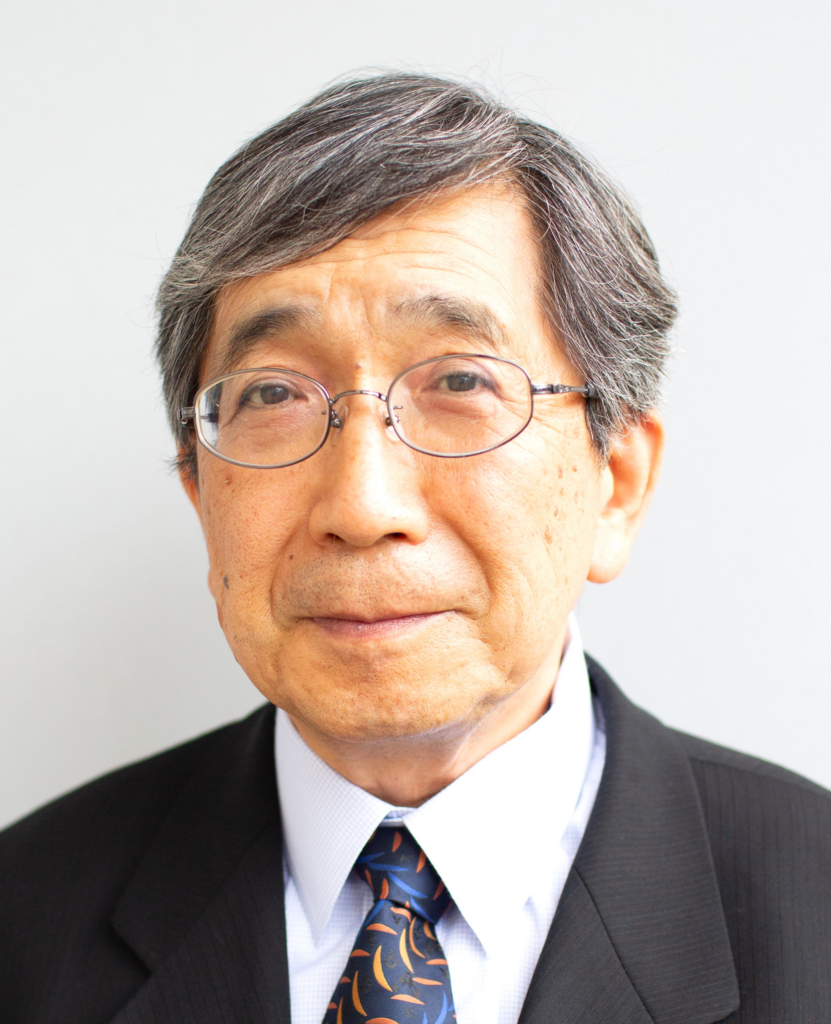
I am delighted that the African Conviviality Center was established last year within the Graduate School of International Cultural Studies at Kobe University — a truly groundbreaking development.
I have agreed to serve as an advisor to the Center in the hope that the experience, knowledge, and personal networks related to Africa that I have built up over the course of my career, including my time at the Ministry of Foreign Affairs, might be of some use.
My own encounter with Africa dates back to January 2006, my 28th year at the Ministry of Foreign Affairs, when I first set foot in Uganda, a landlocked country in East Africa. At the time, Uganda's roads were riddled with potholes, and power and water outages were everyday occurrences — a daily reminder that I had arrived in a developing African country. At the same time, despite lying right on the equator, its high altitude gave it a mild, livable climate, and perhaps because of this, I found the people warm, humorous, easy to talk to, and often quick-witted. I was soon blessed with many friends. About ten years later, in 2016, I returned to Uganda for a second posting — this time as Ambassador. In those ten years, infrastructure such as roads and electricity had advanced considerably, a development to which Japan's ODA projects had contributed significantly. Domestic security had also improved greatly. On the regional front, Uganda was actively accepting large numbers of refugees generated by political turmoil in South Sudan and the Democratic Republic of the Congo. Japan adopted a policy of supporting not only these refugees but also the host communities receiving them, rolling out concrete assistance activities even more swiftly than Western donors. I feel fortunate to have served during a time when I could sense firsthand how Japan's various forms of support were earning a strong reputation within Uganda and how expectations for Japan were rising.
Africa is a young continent, and high economic growth is anticipated there. Africa's population is projected to grow rapidly from roughly 1.5 billion in 2025 to 2.5 billion by 2050, meaning that about one in four people in the world will be African. Even now, the median age remains remarkably young at 18, with roughly 41% of the population under the age of 15. As East Asia — and Southeast Asia as well — continues to age, Asia as a whole is expected to see slowing economic growth and shrinking markets. Under these circumstances, African countries will likely gain greater importance both as markets to develop and as a source of human talent. For Japan, too, the need to build closer relationships with African countries than ever before, in order to draw on Africa's vitality, will only grow. This makes it acutely clear that learning and researching more about Africa is essential. In this context, it goes without saying that the role to be played by the African Conviviality Center is enormous.
As an advisor, I intend to do my utmost to contribute, in whatever way I can, to the achievement of the Center's goals. I sincerely ask everyone for their understanding of the Center's mission and for their cooperation.
Kazuaki Kameda Former Ambassador of Japan to the Republic of Uganda